What we mean by AI contracts
Any contract where an AI system does part of the work, whether you build it, sell it or buy it.
- Supplier and SaaS agreements
- Master services agreements and SOWs
- AI development and integration agreements
- Licences and data agreements
Most software contracts were not written for the AI era.
AI systems hallucinate, produce wrong outputs and cause high-impact errors. Traditional software contracts do not cover any of that, so the liability sits in a grey area: unquantified, unpriced and, in effect, on your balance sheet.
Every wrong answer is arguably a breach
"Performs materially in accordance with the Documentation" sets no threshold. Either your client can claim breach on any error, or you have bolted on a blanket disclaimer that enterprise procurement will not accept. Neither version closes.
Silence on data reads as exposure
Can client data improve your model? Does your model provider see it? If the contract does not answer, your client assumes the worst, and you may already be in breach of the terms you signed with the provider.
You have inherited terms you never negotiated
Your product runs on OpenAI, Anthropic or Google terms: model deprecations, price changes, usage policies. If your client contract does not absorb those changes, the gap between the two contracts is yours alone.
Provider or deployer: the contract decides
Under the EU AI Act, obligations attach to roles: provider, deployer, distributor. If the contract does not say which one you are, you may be carrying obligations nobody is paying you to carry.
Clauses that allocate the risk instead of pretending it is not there.
Pushing all the liability onto your client does not work: they will not sign. Carrying it all yourself does not work either. The job is to name each failure mode and decide, in writing, who owns it.
Output liability
What counts as a failure, what the client must do before relying on an output, and a cap sized to the real exposure rather than the whole contract value.
Acceptance for probabilistic systems
Measurable thresholds on an agreed evaluation set replace "works as documented". Drift and retesting get a process, not an argument.
Data, training and confidentiality
Rights over inputs, outputs and model improvement, with your model provider's terms mapped and flowed down so the two contracts stop contradicting each other.
Ownership of outputs
Who owns what the model produces, what happens to third-party material in the mix, and how infringement risk is shared.
Model change
Upgrades, deprecations and provider switches handled by a mechanism in the contract rather than a renegotiation every time.
Regulatory allocation
Who is the provider and who is the deployer, and which obligations sit where, under the EU AI Act and UK guidance.
Send the contract. Get it back with the gaps closed.
Send what you actually sign
Your MSA, SaaS terms or SOW, plus a short note on what the AI does inside your client's workflow and which model providers sit underneath it. A partner scopes it on a 30-minute call and gives you a price-guaranteed estimate before any work starts.
Get a risk map and redlines
Within days: where the contract is silent, what that silence costs you, and tracked-changes clauses to close it, each one explained in plain English so you can defend it in negotiation.
Sign knowing where the risk sits
Clear allocation on both sides, and a template that holds for the next twenty deals instead of being renegotiated on each one.
"Our contracts were silent on what happens when an AI output is wrong. Krisztian added the clauses that made liability explicit on both sides – my clients know exactly what they're responsible for, and so do I. It took the biggest 'what if' out of every negotiation."
AI startups selling to businesses
Product terms and MSAs that describe what the product actually does.
Consultancies deploying AI into client environments
SOWs, warranties and acceptance criteria for systems that are built, not bought.
Companies buying or integrating AI from a supplier
Procurement terms that protect you when the supplier's model changes, drifts or fails.
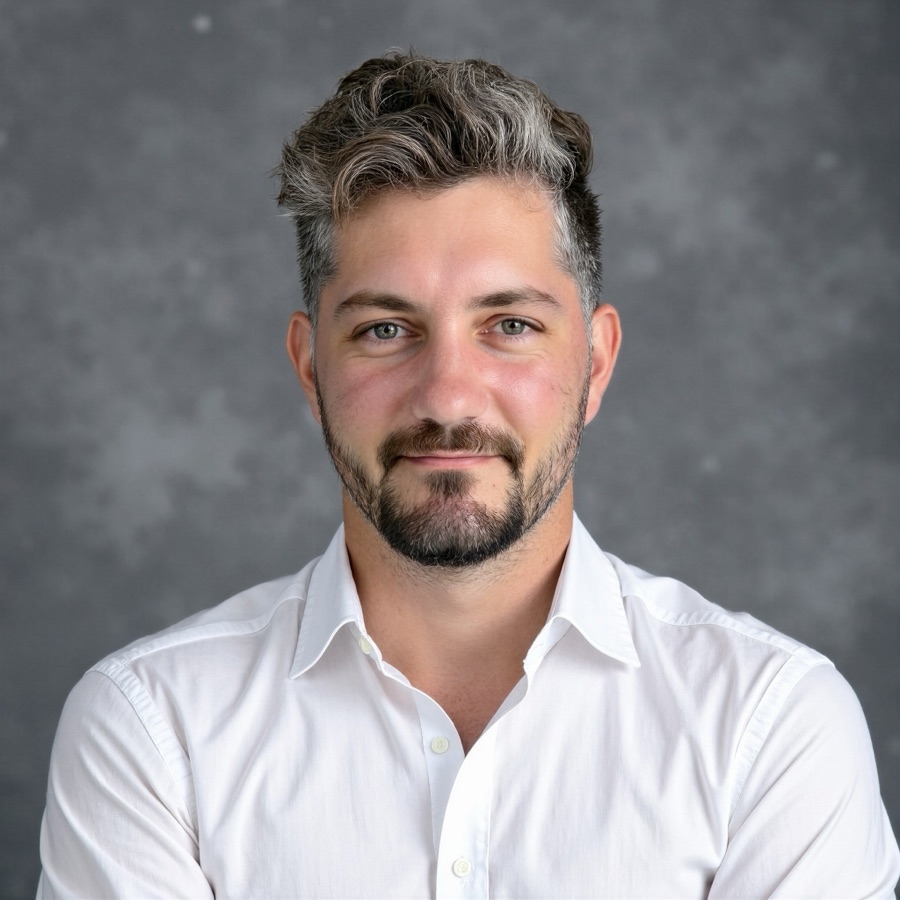
dr.Krisztian Barta
Partner & Lead Advisor, VSQ Legal
Krisztian leads VSQ's practice. In nine years he has closed more than £4 billion of deals, from founders' first SAFEs to nine-figure priced rounds and ten-figure private-equity M&A. He trained at Clifford Chance and practised in its London and São Paulo offices, after earlier roles at Baker McKenzie in Milan and Budapest and at Dacheng (now Dentons) in Nanjing.
He founded VSQ to prove that elite-quality deal work does not need elite-firm prices or timelines. The practice is AI-native: AI handles first drafts and diligence, and a named partner owns every word that reaches you.
What founders ask first.
Something else? Book a 30-minute call and ask us directly.
Find out what your contract does not say about AI.
Send the agreement you are about to sign, or the template you have been sending for a year. On a 30-minute call we will tell you where it is silent, what that silence would cost, and give you a price-guaranteed estimate to fix it.
Nothing on this page is legal advice.